The CEO's AI notebook
Why I've been making myself customer zero for AI
Authored by Steve Harris, CEO, CloudClevr
My sense is that I’m roughly 30% more productive than I was before using AI, based on the volume of work I’m getting through and the time it takes.
As a CEO balancing the day-to-day running of a business with more strategic activity and time to actually think, it’s a significant difference.
Much of that value has come from work that will be familiar to other business leaders: preparing reports, making sense of spreadsheets, pulling information together and getting ready for more productive meetings. These are necessary parts of the job, and they can absorb a lot of time.
They’re also where I’ve started to understand what AI can do for me, and why I think leaders need to experience it for themselves.
Starting with my own working day
At CloudClevr, we help customers use technology to improve how their businesses work. We need first-hand experience of what adopting that technology involves. For AI, that responsibility starts with me.
I think of it as being customer zero. We should be putting the tools to work ourselves, testing their usefulness and learning enough to have informed conversations with customers about the benefits and the challenges.
My own experience has been largely self-taught and in my own time as a starting point. I’ve tried things, questioned the results and gradually found more uses for it. I’m still learning and am not at a point where I’m developing agents myself.
Generative AI tools such as Claude and Microsoft Copilot are now embedded in my daily workflow. Whether it’s bringing together information from multiple spreadsheets or helping me explore trends and anomalies in the data, they enable me to spend less time gathering insights and more time understanding what they mean. The real value isn’t in replacing human judgement. It’s in creating more space for it.
The value becomes particularly obvious when it helps in the middle of a working conversation. During a call with our marketing director, we needed a customer list filtered by particular characteristics. I uploaded the spreadsheet, explained what we needed and had a list back while we were still talking.
Ahead of a customer meeting, I used Claude to synthesise information about the organisation and its leadership team, giving me a clearer picture of how our businesses aligned both culturally and commercially. Within about five minutes, I had something useful to read and share with a colleague so we could best align with our customer. We talk a lot about delivering value, but this has to come from evidence and facts relating to how we can improve the ROI from their technology.
Those are small examples individually. Across a busy week, they add up.
Experience still matters
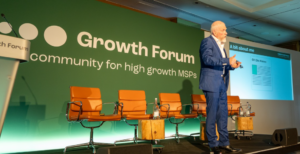
One of the most useful challenges raised at our recent AI panel discussion was about trust. If AI is producing the reporting, how do you know the data and the results are right?
For me, a human has to remain in the loop.
I can use these tools the way I do because I’ve spent years working with business information and learning what “right” looks like. If something looks odd, I can question it. If a conclusion doesn’t fit what I know about the business, I can ask how it was reached and go back to the underlying information.
That experience doesn’t make me infallible, and a polished report doesn’t make an AI output correct. Reviewing and challenging the work remains part of the job.
This is an important part of being customer zero, too. We need to understand what it takes to turn a fast response into something useful enough to inform a business decision.
Making room for curiosity
Seeing the benefits personally has made me more determined to encourage curiosity across our leadership team and the wider business.
People need opportunities to try these tools on work they understand, with the right policies and tools in place. They need to be able to ask questions, share discoveries and talk openly about something that didn’t work as expected.
As a CEO, I can help by showing how I’m using AI and being candid about what I’m still figuring out. A practical example from someone’s working day can make the possibilities much easier to grasp.
There is a progression here: individuals finding useful applications, teams bringing those ideas together, and the business learning how to work better as a whole. We’re on that journey ourselves.
That’s what I want to share through The CEO’s AI Notebook. Real examples of what I’m trying, where it’s making a difference and where my judgement still matters. It’s how we can genuinely deliver value to all our customers regardless of size.
For another CEO wondering where to begin, I’d start with a recurring task you know well; something that takes time and whose output you’re equipped to assess. Give AI a useful job, examine what comes back and build from there. Any insight generated by AI still needs context, judgement and validation. For me, the value comes from accelerating analysis, not replacing accountability.
We’re seeing a significant increase in customer demand for these discussions. That’s how it became valuable to me.
In the next Notebook, I’ll look more closely at reporting: how I use Claude, what has changed and how I challenge the results.